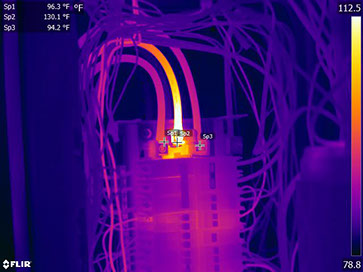
Most electrical failures announce themselves with heat long before they cause an outage or a fire. The problem? That heat is invisible — until you point a thermal camera at it. Infrared inspection turns a hidden, building-up problem into something you can see, document, and fix on your schedule.
What infrared reveals
A loose connection, an overloaded circuit, or a failing breaker runs hotter than its healthy neighbors. A thermal scan of energized panels, breakers, busways and connections makes those hot spots glow on screen — so we can pinpoint the exact lug or breaker that needs attention before it lets go.
Common finds on a thermal scan
Heat is the early-warning system. Infrared just lets us see it before it becomes a failure.
Who should schedule one
Infrared inspection is most valuable for commercial buildings, multi-family properties, and any facility where downtime is expensive — and many insurers and maintenance programs ask for periodic scans. We perform inspections under load for accurate readings, deliver a clear report with prioritized findings, and can correct what we find on the same visit. Pair it with a preventative maintenance agreement and small problems get caught before they ever reach your tenants or your bottom line.