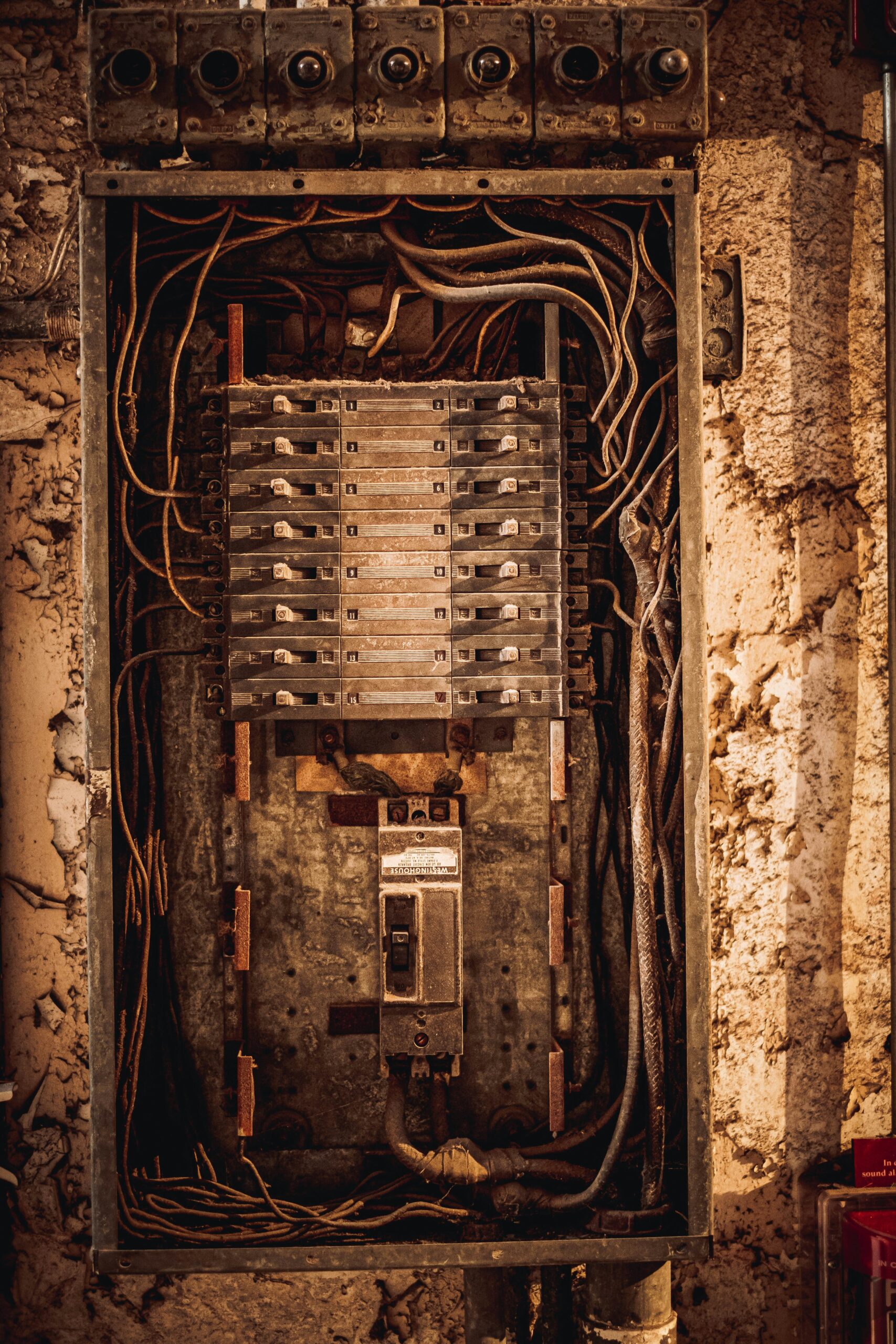
Your electrical panel is the heart of your home’s power. When it cannot keep up with modern demand — EV chargers, heat pumps, induction ranges, home offices — you will see the warning signs long before something fails. Here is how to read them, and what a service upgrade from a licensed electrician actually involves.
The 7 signs to watch for
Any one of these is worth a conversation. Two or more, and an upgrade is likely overdue:
- ⚡Breakers trip often. Frequent trips mean circuits are routinely overloaded, not just unlucky.
- ⚡Lights flicker or dim when large appliances kick on — a sign your service cannot handle peak load.
- ⚡You still have a fuse box, or a panel from a brand with known safety recalls.
- ⚡The panel feels warm, buzzes, or smells faintly of burning. Stop and call an electrician now.
- ⚡You rely on power strips and extension cords because there are not enough outlets or circuits.
- ⚡You are adding major load — an EV charger, hot tub, addition, or whole-home AC.
- ⚡Your service is 100A or less. Most modern homes need 200A; larger homes often need more.
Quick takeaways
- 200A is the modern baseline; 400A suits large homes or heavy EV and HVAC loads.
- A warm or buzzing panel is an emergency — do not wait.
- A proper upgrade includes a permit, inspection and a load calculation.
What a service upgrade actually involves
A real upgrade is more than swapping a box. A licensed electrician runs a load calculation to size your new service correctly, coordinates with the utility for the disconnect and reconnect, pulls the required permit, installs the new panel and grounding, and schedules the inspection. Done right, it is typically a one-day job with a short planned outage.
The goal is not just more amps — it is a panel that is safe, labeled, code-compliant, and ready for whatever you add next.
200A or 400A — which do you need?
Most single-family homes are well served by a 200A service. You step up to 320/400A when you are combining several heavy loads — Level 2 EV charging, electric heat, a large shop, or a sizable addition. Rather than guess, we size it from your actual and planned loads so you do not overpay for capacity you will never use, or upgrade again in two years.
If you have noticed any of the signs above, the safest next step is an on-site assessment. We will tell you honestly whether you need an upgrade now, soon, or not at all — and put a fixed price in writing.
More from the blog
Safety · June 2, 2026
Whole-home surge protection: protect your house before the next storm

EV Charging · May 24, 2026
EV charger at home: what every owner should know before they buy
Talk to a licensed electrician today.
Whether it is a quick repair or a full upgrade, we will scope it and quote it in writing.